

30 Mar When There Is No One Else
The Jewish community is blessed with organizations that nurture Jewish life — caring for our children, supporting families, preserving memory, and strengthening our future.
But when life comes to an end, who is there for the Jew who has no one?
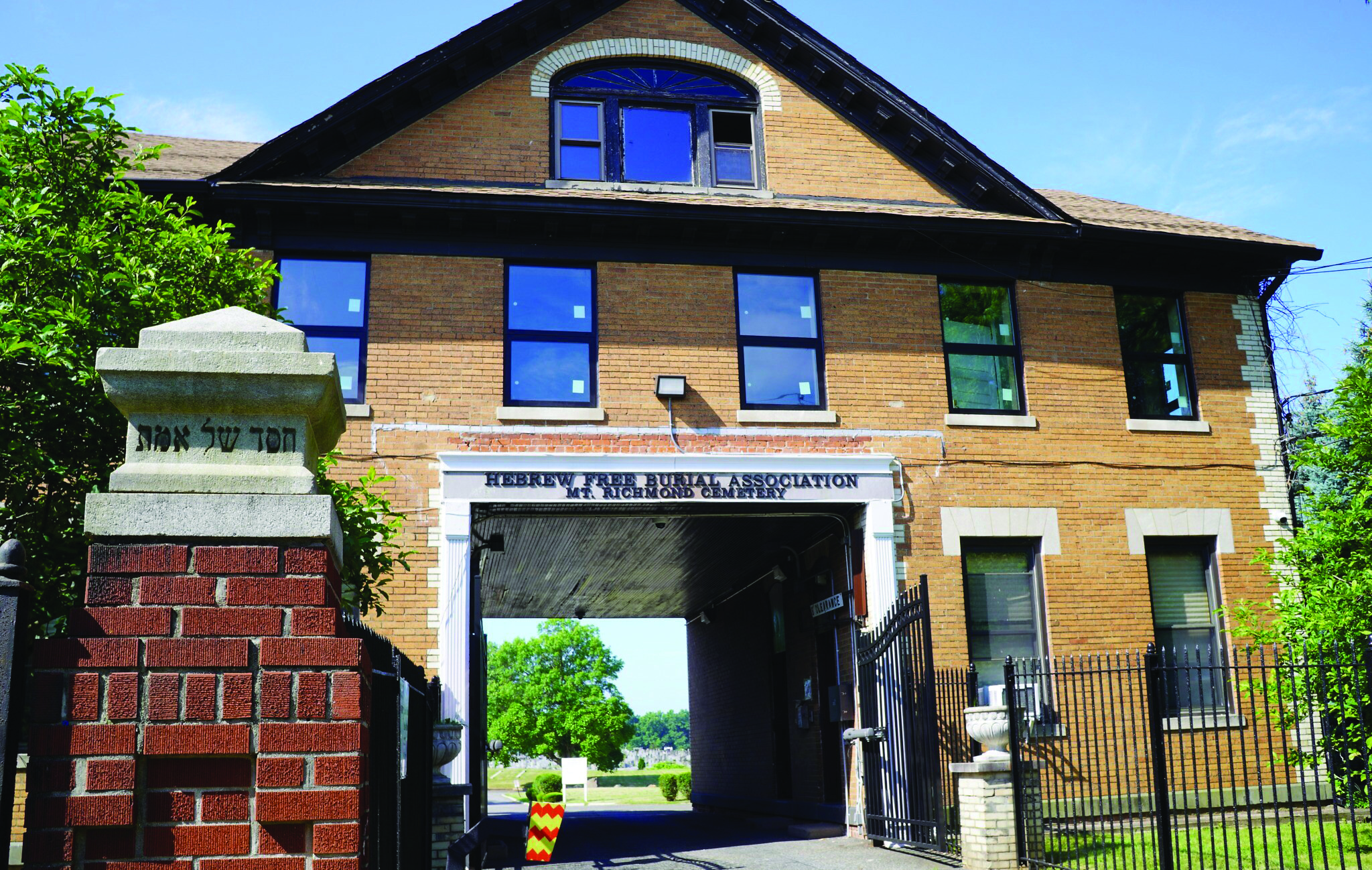
In the New York area, that responsibility rests with the Hebrew Free Burial Association, which is committed to preserving the dignity of every Jewish soul, ensuring that no Jew is ever left behind.
The Call Comes In
For HFBA, the responsibility often begins with a simple phone call.
Sometimes the call comes from a relative — an immediate family member overwhelmed with grief, or a distant cousin who has discovered there is no one else to arrange a burial. Other times, HFBA must make the call — reaching out to hospitals, nursing homes, public administrators, or medical examiners
to ensure that a Jewish individual is not overlooked.
Each year, approximately 300 individuals are entrusted to HFBA’s care. They come from every background — observant and unaffiliated, connected and alone — but all share one fundamental truth: they deserve a proper Jewish burial.
The first step is gathering the necessary information to proceed with care and respect. “We reach out to the family, determine where the body is located, review the death certificate, and secure the required permissions,” explains Rhonda Stein, HFBA’s Senior Funeral Coordinator.
“If there is no family, we work with public administrators or someone who knew the deceased to authorize the burial.”
HFBA also monitors public databases of unclaimed individuals for Jewish names, ensuring that no one is forgotten. In some cases, a Jewish body has been waiting in a morgue for months before being identified and brought to burial. Recently, HFBA laid to rest an individual who had been waiting for 18 months.
Once everything is set in motion, the Chevra Kadisha takes over.
The Tahara Process
The Chevra Kadisha – the Burial Society – begins its work. These are devoted men and women who understand the profound privilege and responsibility entrusted to them.
Tahara, meaning “purity,” is one of the most sacred rituals in Jewish life. In private, with reverence and care, the deceased is prepared for burial according to halacha (Jewish law) and centuries of tradition.
The body is gently cleansed, and is carefully kept covered except for the area being washed, preserving modesty and dignity at every moment. They speak only when necessary and to recite the prayers that accompany the ritual, asking forgiveness if any unintended disrespect is shown and honoring the soul as it prepares to return to its Creator.
After the tahara is completed, the deceased is dressed in simple white shrouds , traditionally made of cotton or linen, symbolizing equality and humilitybefore G-d. The body is then placed in a plain wooden coffin, preparing to return naturally to the earth, just as Jewish tradition prescribes.
Attending the Funeral
The funeral, or levaya – literally meaning “escort”— is Judaism’s final act of accompaniment. Rabbi Shmuel Plafker, HFBA’s Chaplain, officiates these funerals. His role extends far beyond delivering brief remarks at a graveside. He guides families through unfamiliar terrain, offers comfort and clarity, and ensures that every service reflects the dignity of Jewish tradition.
“I officiate the funerals, and occasionally give people advice,” he says. “I find people to say addish (the prayer sanctifying G-d’s name) either daily or on the yahrtzeit (commemoration of a person’s passing), and also coordinate a volunteer minyan when needed.” When a family requests it, HFBA mobilizes a dedicated group of volunteers to ensure that a minyan is present so that kaddish can be recited. Rabbi Plafker begins each levaya by explaining its meaning. “Life is a visit. We’re all visitors, and when someone passes away, we’re escorting them home. The body comes from the Earth, and it must go back to the Earth. The soul ascends to G-d.”
He reminds those present of the concept of Chesed Shel Emet — true loving-kindness. “What we do for the deceased is the purest form of kindness, because it can never be repaid. A living person can reciprocate an act of compassion. The dead cannot.”
Preserving Memory
At Mount Richmond Cemetery, which has been open since 1908, HFBA is committed not only to burying each individual with dignity, but to preserving their legacy, memory, and sense of identity.
In Jewish tradition, a matzeivah — a headstone — is far more than a marker. It affirms that a life was lived, that a Jewish soul walked this world, and that their name will endure. While customs vary as to when a headstone is erected — after shiva, after thirty days, or at the end of the first year — the obligation to remember remains constant.
For those without family, or without the financial means to erect a monument, HFBA ensures that a matzeivah is placed nonetheless. Every grave at Mount Richmond Cemetery bears a name. Every life is acknowledged. Every soul is remembered.
“Every grave has a tombstone,” says Dana Riess, HFBA’s Director of Logistics. “Through the Leave Your Mark campaign, we make sure that even those without family will have a monument. That’s something we’re very careful about.”
Once each year, hundreds of monuments arrive at the cemetery on what HBFA calls “Monument Day.” Row upon row of newly engraved stones are carefully unloaded from a flatbed truck.They are gently positioned so the grounds crew can set them in their proper places, a process that unfolds over several weeks. With every stone that is raised, a once unmarked grave is given identity and permanence. It is a quiet, sacred time at Mount Richmond Cemetery — visible testimony that those who were buried alone will not remain alone in memory.
And the work does not stop there. With a full-time grounds staff, HFBA maintains, resets, and repairs aging monuments, some more than a century old, ensuring that time and weather do not erase memory.
HFBA is also developing an initiative to connect synagogues and members of the broader Jewish community with the names of indigent Jews who were buried without mourners. On Yom Kippur, during Yizkor, those names can be spoken in prayer. Even if a person left this world alone, they need not remain alone in memory.
Through the Leave Your Mark campaign, supporters partner with us in this sacred responsibility. Contributions go directly toward the purchase, engraving, andinstallation of headstones for those who would otherwise remain unmarked.
To help ensure that no Jew is ever forgotten, please visit: www.hebrewfreeburial.org/donate and select “Leave Your Mark.”
Because in life and in death, no Jew should ever be alone. That is why HFBA exists — to ensure that no Jew is ever left behind.